The Orb
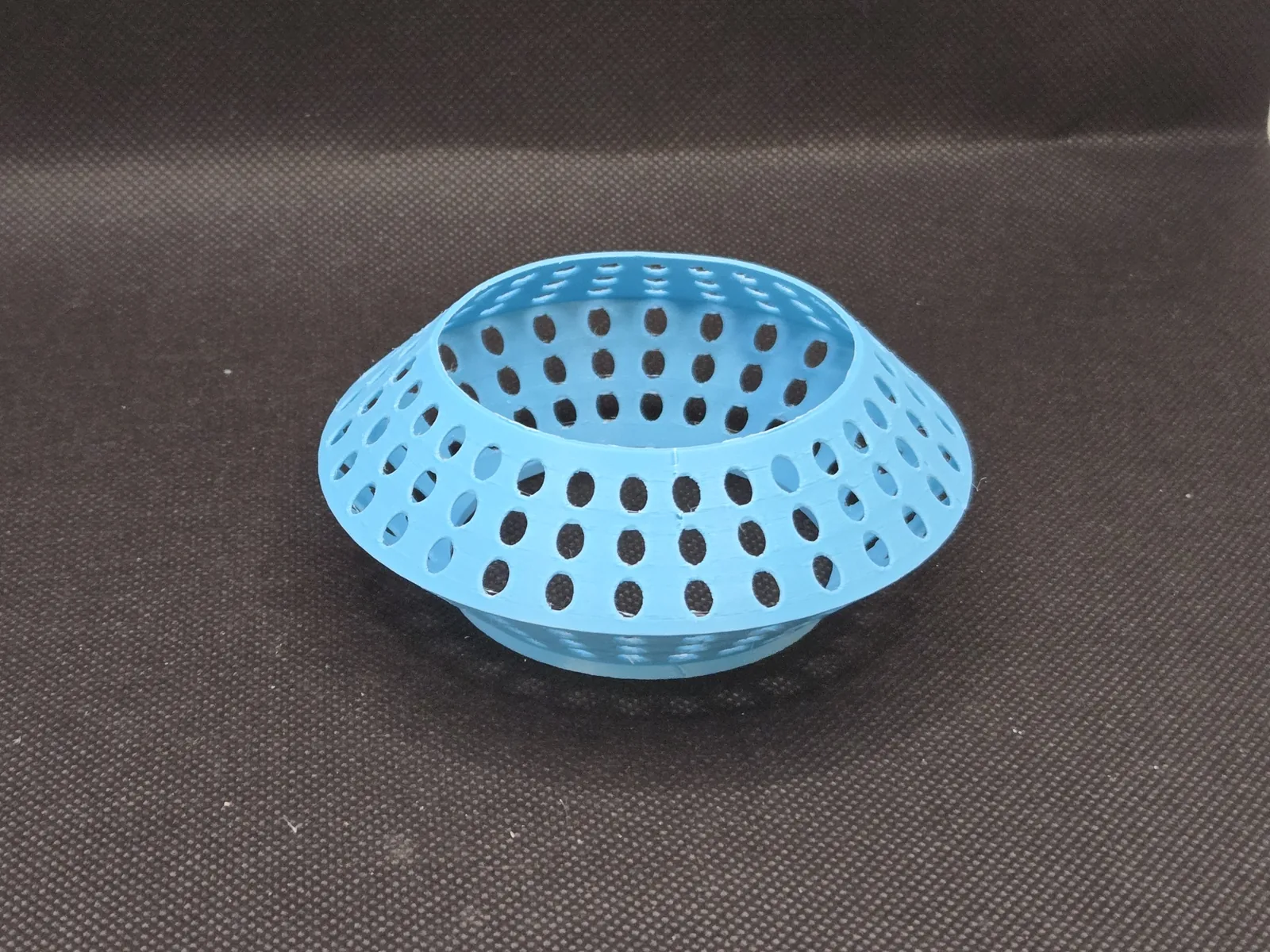
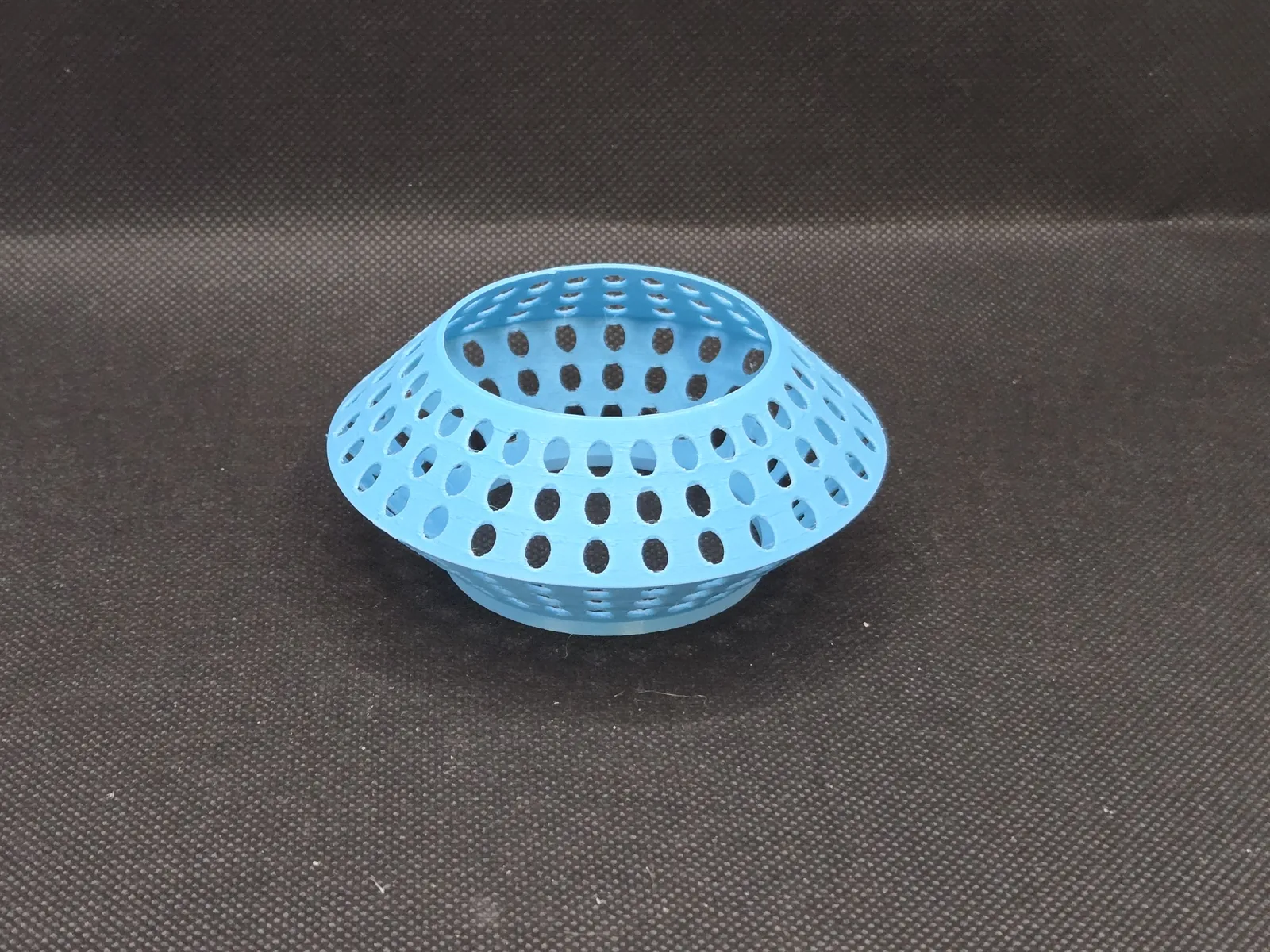
A lamp shade rebuilt as a perforated ring that lets light through instead of blocking it.
The problem
A pendant shade is usually a cone or a drum: a solid surface whose whole job is to stand between your eye and the bulb. It stops the glare by stopping the light, which means most of what the bulb makes never leaves the fixture, and the shade reads as an object hanging in front of a lamp rather than part of it.
The insight
Close the shade into a ring so it has no lower edge to hide behind, then perforate the whole surface. Holes small enough to break up the direct view of the filament still pass light, so the shade stops being an obstacle and starts being the thing that glows. The form came out of taking an ordinary shade apart, not out of a brief.
How it works
- Start from the profile of a conventional shade and revolve it.
- Close the profile back on itself so the surface becomes a ring with no open bottom edge.
- Perforate the whole skin with a repeating hole pattern that follows the curvature.
- Size the holes so they scatter the direct view of the source while still passing light.
- Drop the ring over the light so the source sits inside the hole, not below it.
Materials and process
FDM printed in light blue. Printed in several forms while the shape was being found — a plain ring, a cone, and the perforated ring shown here.
What exists now
Printed and photographed, in several variants. Auston's own description of it is the most useful label this object has: the shape he liked best of anything that came out of the practice. It has not become a product and there is no fixture designed around it yet.
Next: Open. It is a form looking for the right fixture.
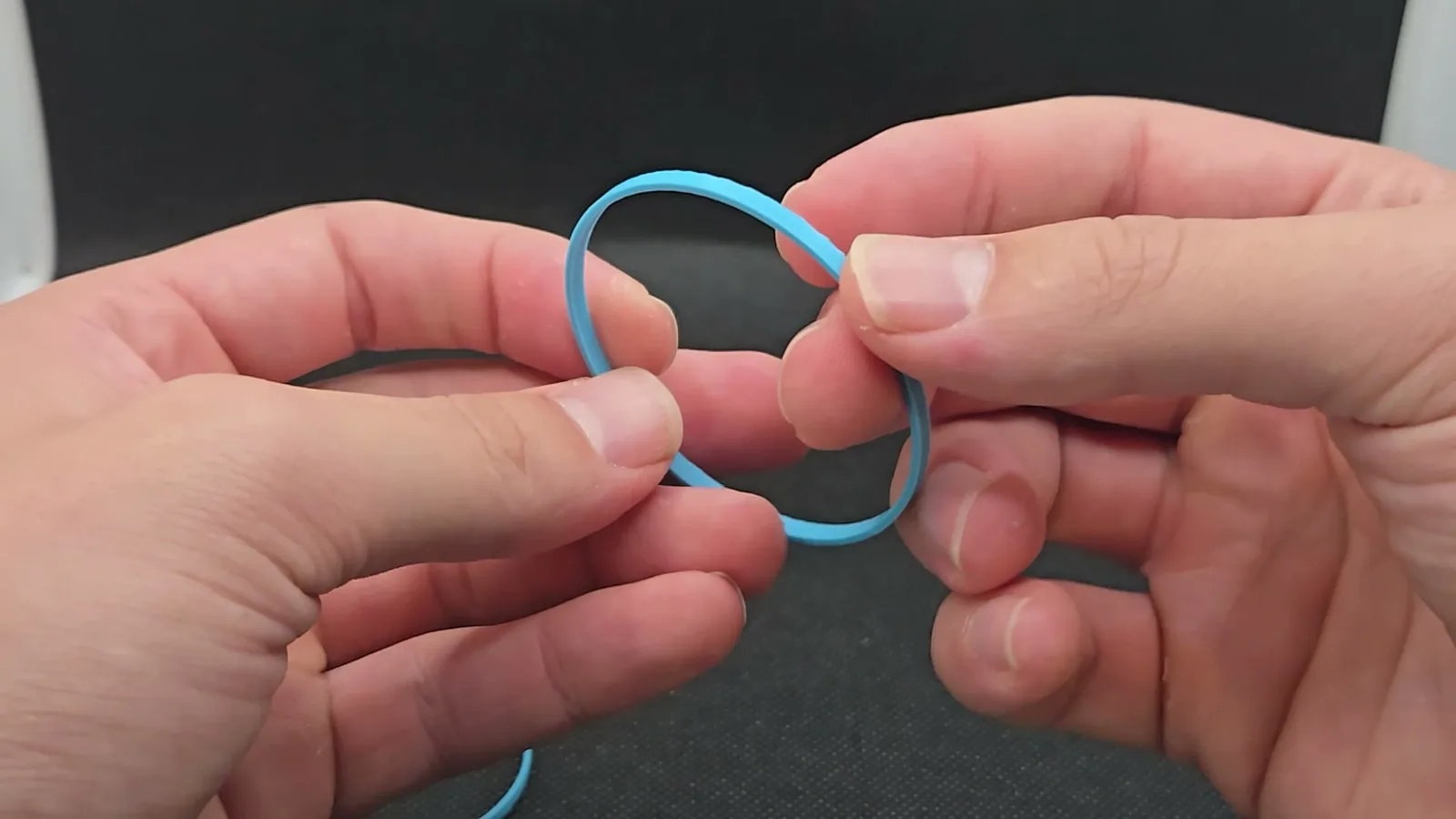
Evidence of making